Skip to contentFor US general contractors, architecture firms, and MEPF engineering firms evaluating an extended BIM team for an upcoming project.
Key Takeaway: US construction firms aren’t short on BIM providers to choose from; they’re short on ways to tell which ones can actually handle project scale, hit accuracy commitments, and work as a genuine extension of the internal team rather than a disconnected task-taker. Excelize has built its US client base on five specific, verifiable strengths: proven scale, portfolio breadth, two decades of applied experience, documented project results, and sustainability-ready modeling for the LEED v5 era.
Why This Decision Matters More in 2026
Choosing a BIM partner isn’t a low-stakes decision, and it matters more now than it did even a few years ago. US construction firms are navigating a persistent labor shortage, with 82% reporting difficulty finding hourly craft workers and 80% struggling to fill salaried roles, according to AGC’s 2026 Construction Hiring and Business Outlook. At the same time, BIM adoption has become close to universal among the firms a general contractor competes against: a landmark McGraw-Hill Construction study found that by 2012, adoption had already reached 74% among US contractors, 70% among architects, and 67% among engineers, up from just 28% industry-wide in 2007.
That study is now well over a decade old, and adoption has only continued climbing since, but even its dated numbers make the point: firms without reliable modeling and coordination capacity aren’t choosing whether to compete on BIM anymore; they’re choosing how to get that capacity when they can’t hire it locally fast enough.
What US Firms Actually Check Before Hiring a BIM Partner
Before evaluating any specific firm, it helps to know what actually separates a capable extended BIM team from one that will create more coordination work than it solves:
- Project scale experience. Has the team actually delivered on projects of comparable size and complexity, not just smaller, simpler work scaled up on a proposal slide?
- Discipline breadth. Can one team handle architectural, structural, and MEP modeling together, or does the relationship require managing multiple disconnected providers?
- Documented outcomes. Are there specific, quantified results from past projects, cost savings, time savings, accuracy figures, or only general claims about quality?
- Integration, not isolation. Does the team work inside the client’s existing coordination process and software stack, or does it operate as a separate silo that has to be manually reconciled?
- Software and standards fluency. Does the team work fluently in Revit, Navisworks, and the client’s chosen common data environment, and does it follow recognized standards like BIMForum’s LOD framework?
See how Excelize measures up. Request a free sample BIM deliverable to evaluate against your own criteria before committing to a scope.
Get a Free Sample→Most of this checklist is hard to fake convincingly on a sales call. A firm can claim scale, breadth, and integration in a proposal, but the honest way to verify each item is to ask for specifics: which projects, at what size, with what documented outcome, using what software and standards. A provider that answers those questions with vague reassurance rather than concrete detail is telling a prospective client something important about what the actual engagement will look like.
Reason 1: Proven Scale on Complex, Multi-Discipline Projects
Scale is where a lot of BIM providers quietly struggle, not because they lack skill, but because they’ve never actually modeled a project with the coordination complexity that comes with true scale. Excelize’s project history includes:
- End-to-end BIM delivery on the Nagpur Metro Rail project, a city-wide transit system spanning more than 40 kilometers, 36 stations, and 2 depots, requiring coordination across civil, structural, and systems disciplines at a scale few BIM providers ever encounter.
- Full BIM modeling support for a 650-foot, 60-floor residential tower in Florida, a high-end complex that included a robotic parking garage with 284 spaces serving 132 units, technology that is effectively unbuildable without the precision BIM modeling provides for coordinating robotics and IoT systems within the structure.
Projects at this scale don’t just require modeling skill. They require a team that has already worked through the coordination failure points that only show up once a project crosses a certain size and complexity threshold.
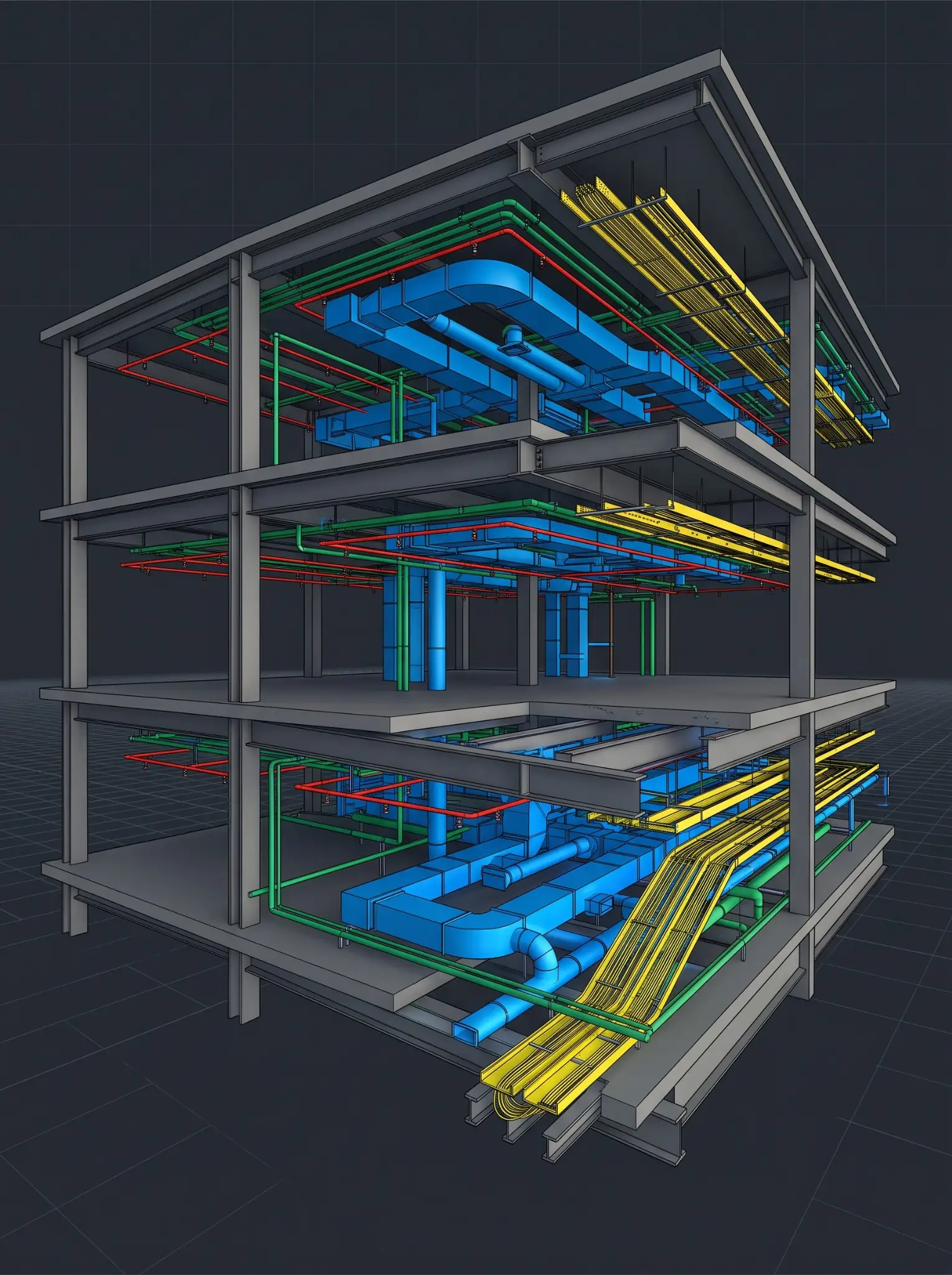
Scale also changes what “coordination” actually means in practice. On a small project, clash detection might involve reviewing a few hundred conflicts across two or three disciplines. On a transit system spanning 36 stations, or a high-rise with embedded robotics and IoT infrastructure, the model has to track thousands of interdependent elements across civil, structural, MEP, and systems disciplines simultaneously, and a single missed coordination point can cascade into a delay that touches multiple stations or floors at once. Teams that have only worked at smaller scale tend to discover this the hard way, on the client’s project, rather than having already built the process discipline that scale demands.
Reason 2: Portfolio Breadth Across Building Types and Geographies
A team that has only ever modeled one building type brings less to a new, unfamiliar project than one that has worked across a genuinely varied portfolio. Excelize’s project experience spans:
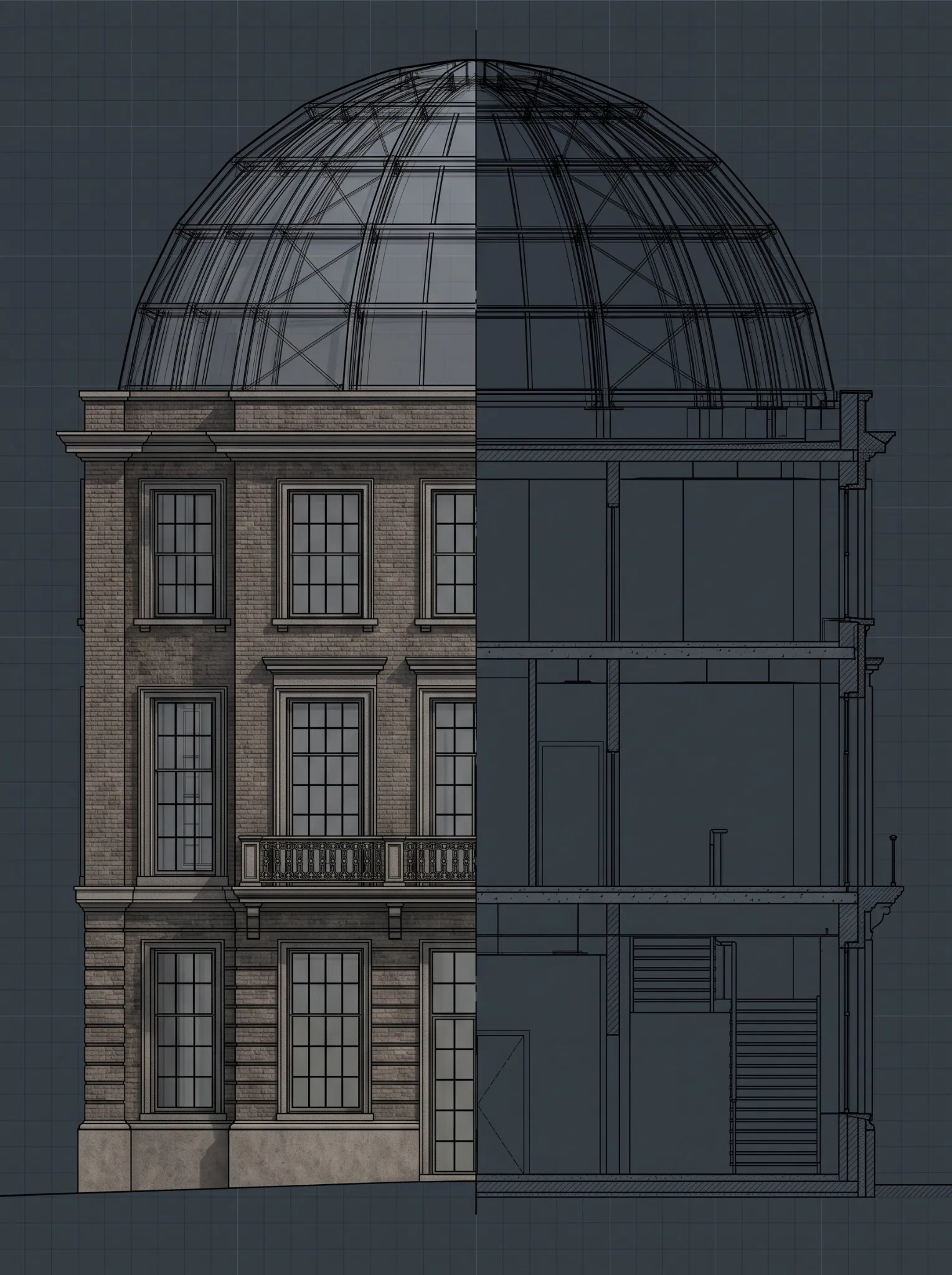
- A refurbishment project for a 52-year-old university library building in California, work that demands an entirely different skill set than new construction, reading and reconciling decades of undocumented changes against the original design intent.
- A Greenfield infrastructure project and a multi-specialty hospital, both in the Middle East, requiring the kind of code and systems complexity that hospitals in particular demand.
- A significant footprint in Qatar’s construction market, built out ahead of the country’s FIFA World Cup infrastructure push, work that required coordinating aggressive schedules against exacting international standards.
The specific skill set required to model a heritage building bears almost no resemblance to what a metro rail project or a hospital demands. A team that has done all three brings pattern recognition to a new project that a narrower-experience provider simply hasn’t had the chance to build.
Talk through your project’s specific requirements. Book a Discovery Session with Excelize’s team to see which parts of this experience apply to your next project.
Book a Discovery Session→Reason 3: Two Decades of Experience Applied to Every New Project
BIM is a field that keeps changing, new software releases, new coordination standards, new client expectations, and experience matters because it’s what turns a new project’s inevitable problems into recognizable ones instead of surprises. Excelize has been delivering BIM services since 2004, across more than 2,500 projects for over 300 clients, long enough to have build a team where problem-solving on complex coordination challenges has become practiced rather than improvised.
That experience shows up in specific, practical ways: knowing which clash types tend to recur on a given building type before the model even flags them, recognizing when a client’s internal standards are likely to create downstream coordination friction, and having already worked through the kind of edge cases, unusual structural systems, non-standard MEP routing, incomplete legacy drawings, that a newer team would be encountering for the first time on a live client project.
There’s a compounding effect to this kind of experience that’s easy to underrate. A team that has resolved a particular category of coordination conflict a dozen times develops an instinct for where to look first when a similar issue appears on a new project, instead of working through the problem from first principles each time.
That translates directly into faster resolution during coordination reviews and fewer conflicts that make it all the way to the field before getting caught. It’s also why continuity matters inside a BIM team: institutional knowledge that lives in individual modelers and coordinators, carried from project to project, is difficult to replicate with a team that’s assembled fresh for each new engagement.
Reason 4: Verified Project Results, Not Marketing Claims
Generic claims about quality are easy to make and hard to evaluate. Specific, quantified outcomes are what actually let a prospective client judge a BIM partner’s real capability. From Excelize’s own delivered projects:
8% cost savings achieved against projected costs on a $1.2 billion project.
66% time savings in producing a clash detection and resolution (CDR) model for a 74,000-square-foot renovation project.
97% accuracy in predicting steel consumption on a 28-floor residential project.
These are Excelize’s own reported project results, not third-party audited figures, and they’re presented here as exactly that: specific, verifiable claims a prospective client can ask to see substantiated during due diligence, rather than the vague “quality and precision” language that most BIM marketing relies on.
Reason 5: Sustainability-Ready Modeling for the LEED v5 Era
Sustainability requirements in US construction just got significantly more demanding. The U.S. Green Building Council launched LEED v5 in 2025, and decarbonization now accounts for 50 percent of a project’s total certification score, with every LEED v5 project required to produce an operational carbon projection and adopt a long-term decarbonization plan. That’s a meaningfully higher bar than prior LEED versions, and it changes what’s expected from the BIM model itself.
Energy analysis, material specification tracking, and life-cycle carbon data increasingly need to live inside the coordinated model from early design onward, not get bolted on separately for a certification submission late in the process. A BIM partner that treats sustainability data as a core part of the modeling workflow, rather than an afterthought, is better positioned to support a LEED v5 certification path without the rework that comes from retrofitting carbon data into a model that was never structured to carry it.
Practically, that means asking a prospective BIM partner a specific question rather than a general one: not “do you support sustainable design,” but “can your models produce an operational carbon projection directly from the coordinated model, or does that get assembled separately by a consultant after the fact.” The former is what LEED v5’s decarbonization requirement actually calls for; the latter is the old workflow wearing a new certification label, and it tends to reintroduce exactly the kind of late-stage rework that a well-structured BIM process is supposed to eliminate in the first place.
Conclusion
The firms winning US construction work in 2026 aren’t necessarily the ones with the biggest internal BIM department; they’re the ones who’ve found a genuinely reliable extended team to fill the gap the labor market won’t. Scale that’s actually been tested, breadth across building types, two decades of applied experience, project results specific enough to verify, and modeling built for a sustainability standard that just raised its own bar, that’s a checklist any US construction firm can use to evaluate a BIM partner, whether or not that partner is Excelize. Excelize has supported US general contractors, architecture firms, and MEPF engineering firms with BIM modeling, coordination, and documentation since 2004, across more than 2,500 projects for over 300 clients.
See if it’s a fit. Send your project scope to Excelize’s extended BIM team for a quote and a direct look at how the team would approach it.
Request a Quote→FAQ
What should a US construction firm look for in a BIM partner?
Proven experience at comparable project scale, breadth across architectural, structural, and MEP disciplines, documented and quantified project outcomes rather than general quality claims, genuine integration into the client’s existing coordination process, and fluency in standard software and frameworks like Revit, Navisworks, and BIMForum’s LOD specification.
Why are US construction firms increasingly using extended BIM teams?
AGC’s 2026 Construction Hiring and Business Outlook found 82% of firms struggling to find hourly craft workers and 80% struggling with salaried roles, while BIM adoption has become close to standard practice industry-wide. An extended BIM team lets a firm add modeling and coordination capacity without depending entirely on local hiring.
How does LEED v5 change what’s expected from a BIM model?
LEED v5, launched by the USGBC in 2025, makes decarbonization 50% of a project’s total certification score and requires every project to produce an operational carbon projection and long-term decarbonization plan. That means energy and carbon data need to be built into the coordinated model from early design rather than added late for certification.
What kinds of projects has Excelize worked on?
Excelize’s project experience spans transit infrastructure (including a 40+ kilometer, 36-station metro rail system), high-rise residential towers, heritage building refurbishment, hospitals, and Greenfield infrastructure across the US, Middle East, and India, supporting general contractors, architecture firms, and MEPF engineering firms since 2004.
Are Excelize’s reported project results independently verified?
The specific figures cited, such as cost savings, time savings, and accuracy rates on individual projects, are Excelize’s own reported outcomes from delivered work rather than third-party audited data. Prospective clients evaluating any BIM partner’s claims, including these, should ask for supporting detail as part of due diligence.
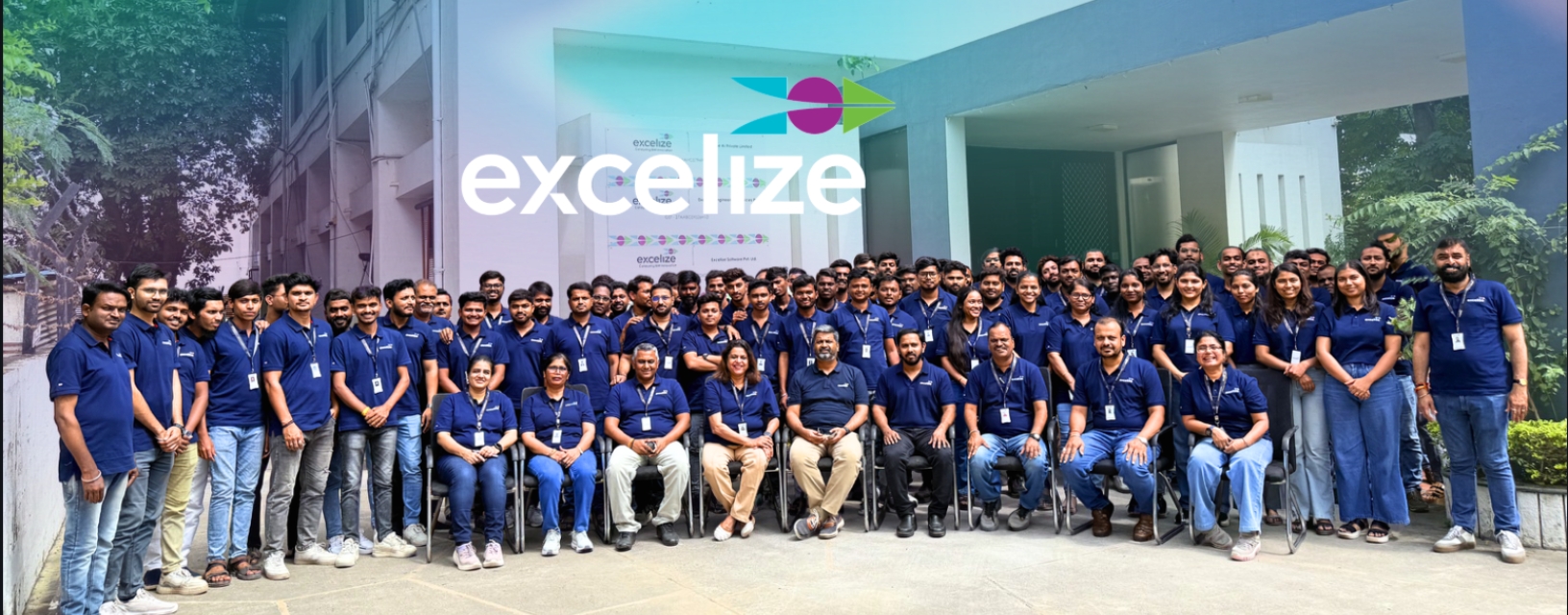
Excelize is a BIM services partner supporting US general contractors, architecture firms, and MEPF engineering firms with modeling, coordination, and documentation delivered by an extended BIM team since 2004.