






Subhead: What US contractors, architects, and owners actually pay for BIM outsourcing in 2026, sourced from verified labor data, market research, and published industry benchmarks, not vendor marketing.
For US contractors, architects, and project owners evaluating BIM outsourcing against an in-house build.
Key Takeaway: BIM outsourcing pricing in the US ranges from roughly $15-40 an hour for offshore production work to $75-150+ an hour for US-based coordination, with the gap driven mainly by Level of Detail, discipline scope, and provider location. The more useful comparison for most firms isn’t the hourly rate at all, it’s the fully loaded cost of an in-house hire, which regularly runs $117,000-$180,000 a year once benefits, software, and overhead are counted honestly.
If you’re a contractor, architect, or project owner in the US trying to make sense of BIM outsourcing costs in 2026, the confusion is real. Every vendor quotes differently, and most of what’s published online is aggregated vendor marketing rather than verified, sourced data. This guide is built the other way around: every figure below is either traced to a named source with a live link, or explicitly flagged as a self-reported industry estimate rather than an audited fact.
Why US Firms Are Turning to BIM Outsourcing in 2026
The labor math behind BIM outsourcing starts with a workforce gap that isn’t closing on its own. The Associated Builders and Contractors’ economic model estimates the US construction industry needs 499,000 net new workers in 2026 to keep pace with demand, up from 439,000 in 2025 as spending picks up. That’s the industry-wide backdrop; the specific difficulty of filling BIM and VDC roles sits on top of it.
Associated General Contractors of America’s 2026 Construction Hiring and Business Outlook survey found 82% of firms struggling to fill hourly craft positions and 80% struggling with salaried roles, a category that includes BIM coordinators and modelers at most firms.
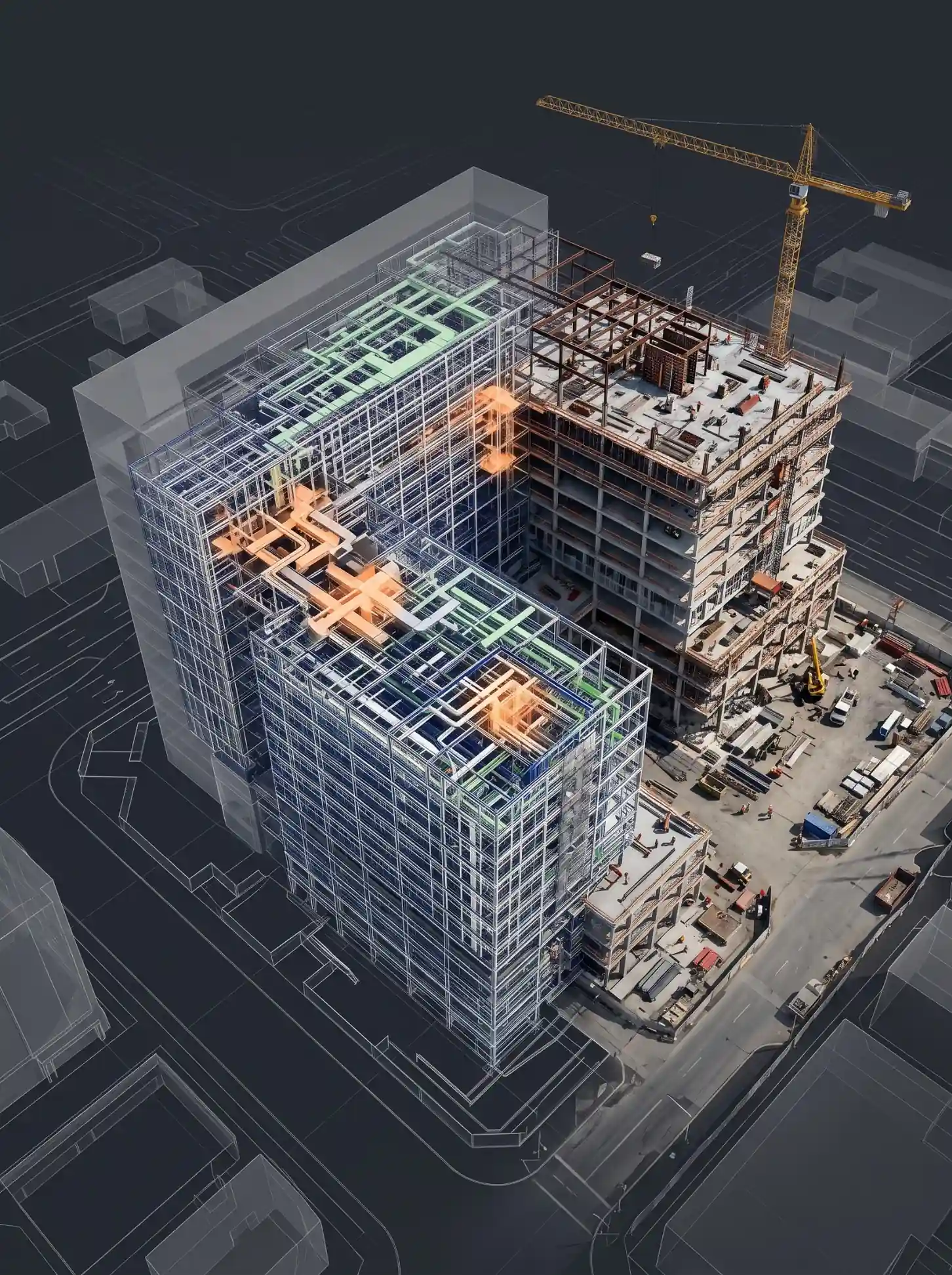
Building Information Modeling itself is a data-rich, intelligent 3D process, not just geometry, but structured information about materials, systems, cost, and schedule, used for design visualization, clash detection, quantity takeoffs, and long-term facility management.
BIM outsourcing means delegating some or all of that modeling and coordination work to an external, specialized team, typically based in India, the Philippines, Eastern Europe, or increasingly Latin America for firms that need closer time-zone overlap. When local talent is scarce and expensive, as the numbers above confirm it currently is, outsourcing fills a real gap rather than existing purely as a cost-cutting tactic.
Market growth reflects that shift. Mordor Intelligence sizes the North America BIM market at $3.98 billion in 2025, projected to reach $8.82 billion by 2031 at a 14.18% compound annual growth rate, with the United States accounting for roughly 80.75% of that regional total. Worth naming honestly: market-sizing estimates for BIM vary noticeably by research vendor, one widely cited MarketsandMarkets estimate puts the US BIM market specifically at a different figure with a similar growth trajectory, so treat the dollar figure as directional rather than precise, and the growth rate as the more durable signal.
Why BIM Outsourcing Costs Vary So Much
Seven factors, working together, explain most of the spread in any BIM outsourcing quote:
- Deliverable type. A basic model is a different scope of work entirely from a fully coordinated, data-rich, clash-detected federated model.
- Level of Detail (LOD). LOD 100 conceptual massing and LOD 400 fabrication-ready models require entirely different effort levels, covered in detail below.
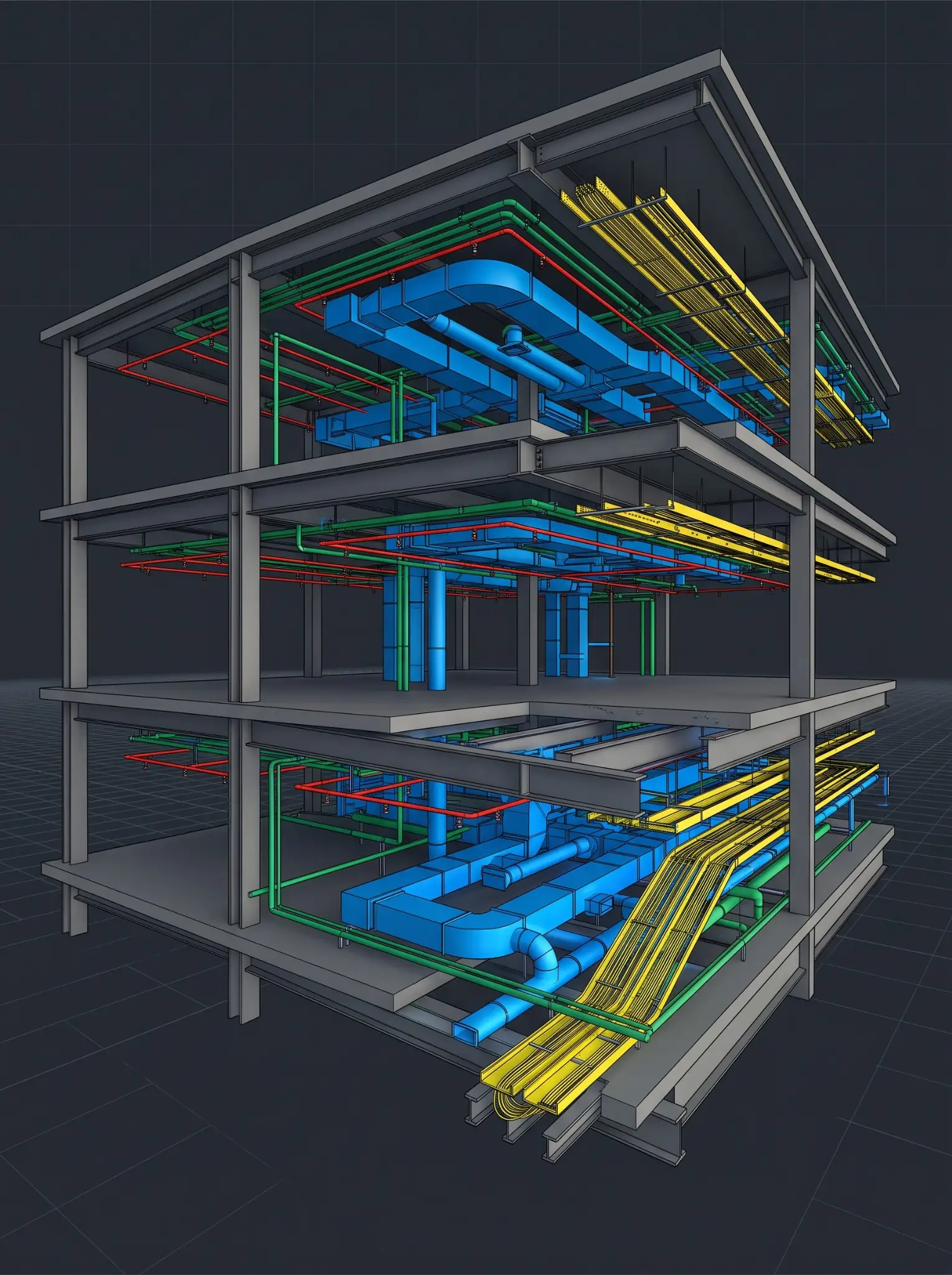
- Discipline scope. Architectural-only modeling is comparatively simple; full MEP coordination is intensive and priced accordingly.
- Project size and complexity. A 10,000-square-foot office and a 500,000-square-foot hospital behave nothing alike from a modeling-effort standpoint.
- Provider location. Hourly rates shift dramatically by geography, covered in the pricing section below.
- Timeline urgency. Compressed deadlines commonly carry a rush premium, generally reported in the 20-35% range by outsourcing vendors.
- Special deliverables. 4D scheduling, 5D cost integration, COBie data, and scan-to-BIM each add meaningful scope beyond a standard model.
BIM Outsourcing Pricing in the US: What the Market Actually Shows
No single authoritative body publishes official BIM outsourcing rate cards, so the ranges below are aggregated from multiple 2026 industry-published sources rather than one canonical benchmark. Treat them as a reasonable planning range, not a quote.
By provider location, hourly rates consistently reported across current 2026 sources cluster as follows: offshore providers in India, the Philippines, and Eastern Europe generally run $15-40 an hour for production modeling work, with senior offshore modelers specifically clustering toward $20-35 an hour. Nearshore providers in Mexico and Latin America, which offer meaningfully better time-zone overlap for coordination-heavy work, generally run $35-60 an hour.
US-based firms doing coordination and on-site collaboration run considerably higher, commonly $75-150 an hour depending on specialization, and one national average across US-based BIM consulting specifically lands around $39 an hour when offshore-heavy averages are blended in, which illustrates how much the headline “average” depends on what’s being averaged.
Per-square-foot pricing is the more common structure for defined-scope projects. Aggregated across current market sources, typical 2026 ranges look like this:
| BIM Service Type | Typical Cost Per Sq. Ft. | Notes |
|---|---|---|
| Architectural BIM modeling | $0.50-$2.00 | Residential, commercial office, institutional |
| Structural BIM modeling | $0.70-$2.50 | Commercial, industrial, bridges |
| MEP BIM modeling | $1.00-$3.00 | All building types; MEP-intensive work runs higher |
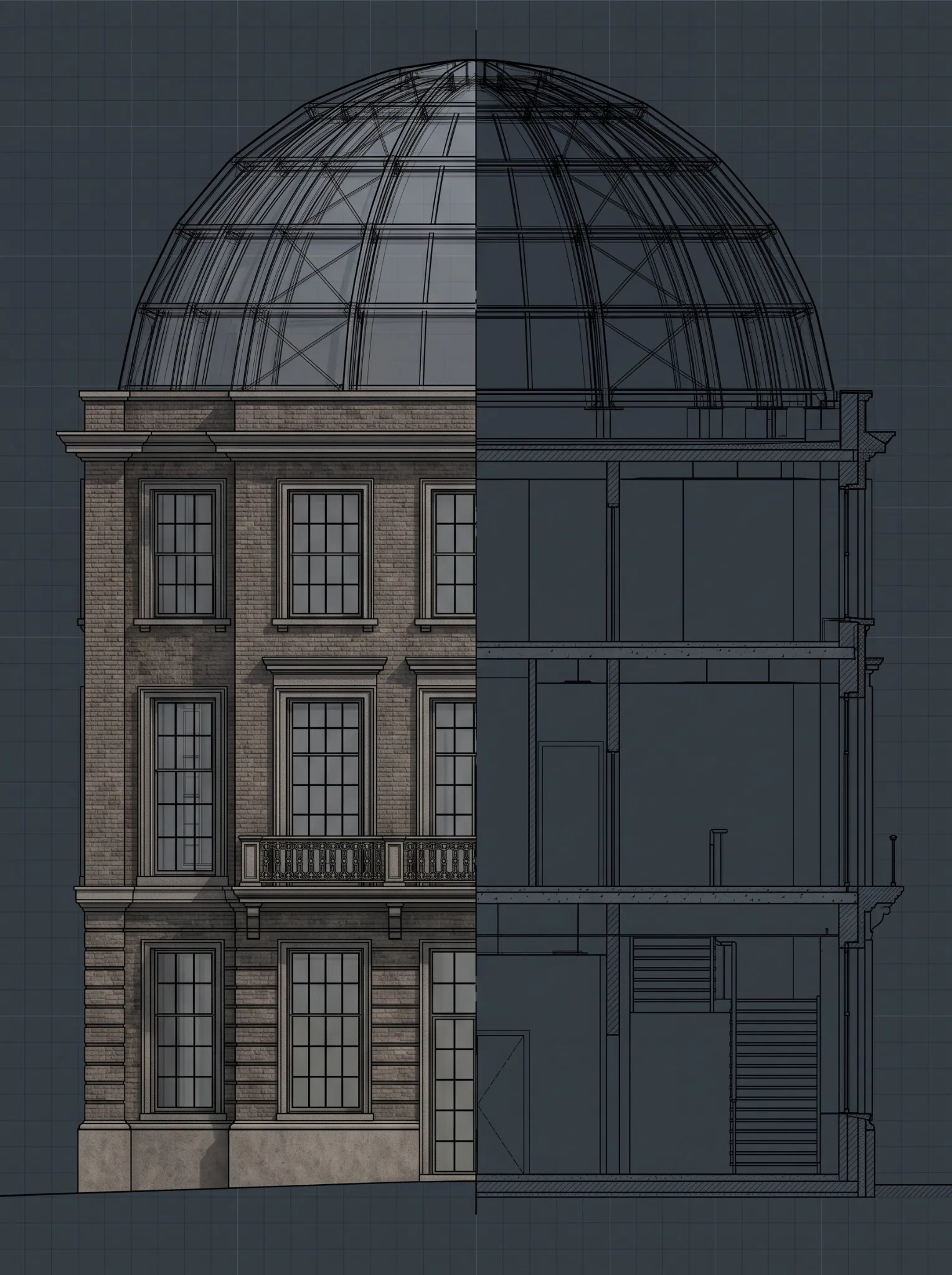
| Scan-to-BIM, LOD 300 | $1.50-$4.00 | Renovation, heritage, as-built documentation |
| Scan-to-BIM, LOD 400+ | $3.00-$10.00+ | Hospitals, data centers, critical facilities |
A useful rule of thumb repeated across multiple sources: pricing under $0.50/sq. ft. usually signals basic LOD 200 work with limited coordination; pricing above $5/sq. ft. usually reflects high-end MEP or complex scan-to-BIM scope.
Illustrative cost scenarios, calculated from the verified ranges above rather than drawn from any specific real project, help make these numbers concrete:
- Small office renovation (15,000 sq. ft, LOD 300, architectural only, working from existing drawings): at roughly $1.00-$1.50/sq. ft., total modeling cost lands around $15,000-$22,500.
- Mid-size commercial building (80,000 sq. ft, LOD 350, full MEP coordination with clash detection): at roughly $1.50-$2.50/sq. ft. given the added discipline scope, total cost lands around $120,000-$200,000.
- Ongoing retainer for a mid-size AEC firm (two dedicated offshore or nearshore coordinators): at $20-40/hour blended, roughly 3,600-4,000 combined annual hours puts the retainer around $72,000-$160,000 a year, well under the $234,000-$360,000 that two fully loaded in-house coordinators would cost at the $117,000-$180,000 per-head range calculated earlier.
These are planning-level estimates built from the rate ranges above, not quotes, actual pricing depends on the specific scope, existing documentation quality, and coordination complexity of a given project.
Get a project-specific BIM outsourcing quote. A short conversation about square footage, discipline scope, and required LOD gives a far more useful number than any published range.
Talk to Excelize About BIM Outsourcing Costs→How LOD Level Drives Cost
Level of Detail is the single most consequential, and most frequently misunderstood, driver of BIM pricing.
| LOD Level | What It Means | Relative Cost Impact |
|---|---|---|
| LOD 100 | Conceptual massing, rough volumes | Lowest |
| LOD 200 | Basic geometry, approximate sizes and locations | Low |
| LOD 300 | Precise, coordination-ready geometry (the common US commercial standard) | Moderate |
| LOD 350 | Construction coordination, clash-detection ready | Moderate-High |
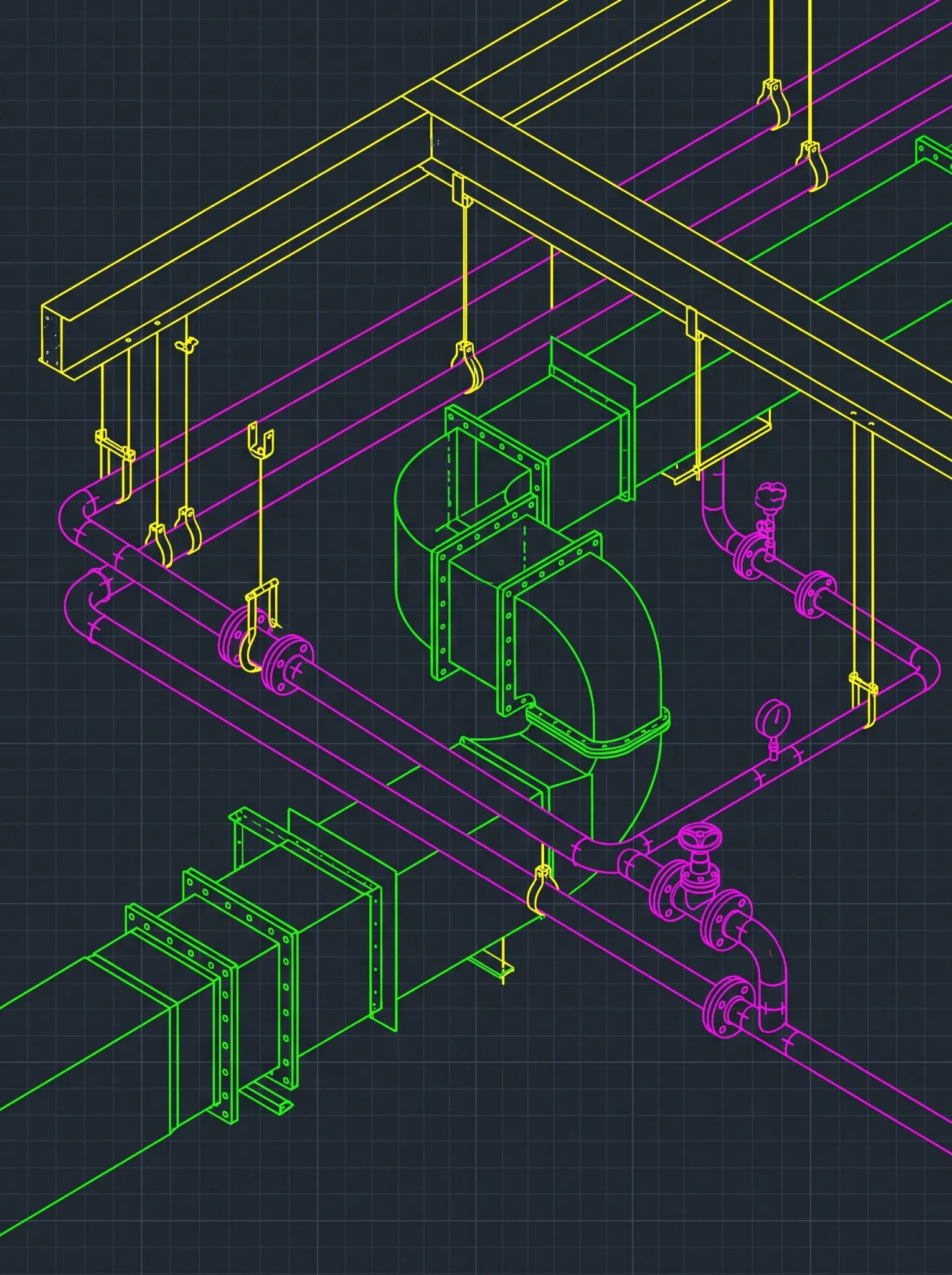
| LOD 400 | Fabrication-level detail, shop-drawing quality | High, commonly 2-4x LOD 300 cost |
| LOD 500 | Verified as-built, full facility management data | Highest |
The jump from LOD 300 to LOD 400 is the one that catches firms off guard: modeling hours multiply along with coordination cycles, QA checks, and data entry requirements, so a scope creep from “coordination-ready” to “fabrication-ready” can double or triple the cost without anyone explicitly deciding to spend more.
In-House vs. Outsourced: The Real Cost Comparison
Most firms compare outsourcing against a salary figure and stop there, which understates the real cost of an in-house hire substantially. Glassdoor’s 2026 data puts median BIM Coordinator base pay at roughly $75,000 a year, with a typical range of $59,000 to $96,000. That’s the starting point, not the full picture.
Architecture and engineering firms typically carry overhead of 150% to 162% of direct labor cost, per the Deltek Clarity A&E Industry Study, once benefits, payroll taxes, software licenses (Revit, Navisworks, Autodesk Construction Cloud commonly run $4,000-$8,000 per seat annually), a workstation, training, office overhead, and a one-time recruiting fee are all counted.
Applied to a realistic base salary, that overhead multiplier puts the fully loaded annual cost of a single in-house BIM coordinator in the US at roughly $117,000 to $180,000, not the $70,000-$95,000 the base salary alone suggests.
Set against that, a dedicated outsourced BIM arrangement, whether offshore or nearshore, commonly runs in the range implied by the hourly rates above: for a coordinator working roughly 1,800-2,000 hours a year at $20-50/hour, that’s an annual range of roughly $36,000 to $100,000 depending on location and seniority, with software, hardware, training, recruiting, and idle-month cost all absorbed by the provider rather than the client firm. The gap between those two totals, not the headline hourly rate, is the number worth taking to a budget conversation.
Where In-House Wins, Where Outsourcing Wins
Cost is one factor. Capability, control, and scalability often decide the question in practice.
In-house genuinely wins when: real-time, in-office communication matters more than cost; the team needs deep institutional knowledge of a firm’s specific templates, standards, and project history; a project’s data sensitivity, government, healthcare, defense, makes keeping information entirely in-house close to non-negotiable; or the firm’s project pipeline is dense and consistent enough year-round that a fully utilized coordinator earns their fully loaded cost.
Outsourcing genuinely wins when: project volume is seasonal or lumpy, since no outsourcing partner charges for idle months the way a salaried employee’s overhead accrues regardless of workload; a project needs specialty depth (MEP, structural, and architectural expertise together) that a single in-house hire can’t replicate; a large project lands and capacity needs to scale immediately rather than through a multi-month hiring cycle; or the firm would rather not carry the software, hardware, and training investment itself.
Compare in-house and outsourced costs for a specific project pipeline. A direct conversation is the fastest way to see which model actually wins for a given volume and specialty mix.
Talk to Excelize About In-House vs. Outsourced BIM→What “30-40% Savings” Claims Actually Mean
Almost every BIM outsourcing provider, including sources cited earlier in this guide, reports 30-40% as the typical savings range for firms outsourcing to established offshore or nearshore partners. That figure is worth using with the same caution applied to any self-reported vendor statistic: it isn’t independently audited, and it depends heavily on what’s being compared, a headline hourly rate against a base salary tells a very different story than a fully loaded outsourced cost against a fully loaded in-house cost.
The more defensible version of the savings argument is the fully loaded comparison worked through above: roughly $117,000-$180,000 for in-house against roughly $36,000-$100,000 for an equivalent outsourced arrangement. That gap, calculated honestly rather than cited as a vendor talking point, is where the real savings case lives, and it holds up regardless of which specific percentage a given provider advertises.
How to Vet a BIM Outsourcing Partner in the USA
The market in 2026 ranges from genuinely strong, certified teams with real domain expertise to firms reselling offshore freelancer capacity behind a polished website. A few checks separate the two:
- Portfolio with comparable project types. Ask for actual deliverable samples from projects similar in scope, not generic marketing renders.
- Genuine LOD fluency. Ask a prospective partner to explain the practical difference between LOD 300 and LOD 350 in the context of clash detection specifically. A vague answer is a real signal.
- Software proficiency matched to the project. Confirm proficiency in the specific tools required, Revit, Navisworks, BIM 360, or whatever the project’s ecosystem actually uses.
- Real data security protocols. For healthcare, government, or defense work, ask specifically about NDA terms, encryption in transit and at rest, role-based access controls, and any relevant certifications, and expect a specific answer, not a general assurance.
- Communication infrastructure that actually works. Time-zone overlap, English fluency, a named dedicated project manager, and a clear escalation path matter more than most firms realize until a problem is already underway.
- A real pilot project. Before a large engagement, give a prospective partner a section of an actual project, not a sanitized test file, and evaluate the result.
- US-based client references, actually called. Ask specifically about quality consistency and deadline adherence, not just general satisfaction.
Frequently Asked Questions
How much does BIM outsourcing cost in the USA in 2026?
Pricing spans roughly $0.50 to $10+ per square foot depending on scope and LOD, or $15-40 an hour offshore up to $75-150+ an hour for US-based coordination work. Most standard commercial projects fall in the $1-3 per square foot range.
Is BIM outsourcing cheaper than hiring in-house in the US?
Generally yes, when compared honestly. A fully loaded in-house BIM coordinator commonly costs $117,000-$180,000 a year once benefits, software, and overhead are counted, against roughly $36,000-$100,000 for an equivalent outsourced arrangement, though the exact gap depends heavily on utilization and project volume.
What factors affect BIM outsourcing pricing the most?
Level of Detail (LOD) is typically the single biggest driver, since moving from LOD 300 to LOD 400 can double or triple modeling cost. Discipline scope, project size, provider location, timeline urgency, and special deliverables like 4D/5D or scan-to-BIM all compound on top of that.
How much does Scan to BIM cost in the USA in 2026?
Basic architectural scan-to-BIM at LOD 200-300 generally runs $1.50-$4.00 per square foot; fabrication-level LOD 400+ scan-to-BIM for dense-MEP environments like hospitals or data centers can reach $10.00+ per square foot before on-site scanning cost is added.
Should I trust vendor-reported “30-40% savings” figures for BIM outsourcing?
Treat them as directional rather than audited. The figure is widely repeated across outsourcing providers, but it isn’t independently verified and depends heavily on what’s being compared. Running the fully loaded in-house cost against a specific outsourced quote for your own project gives a real number instead of a vendor average.
How can I reduce BIM outsourcing costs without sacrificing quality?
Define the required LOD precisely before requesting quotes, avoid unnecessary rush timelines that trigger a 20-35% premium, start with a small pilot project before a large engagement, and keep coordination oversight in-house even when production work is outsourced.
Get a transparent BIM outsourcing quote for a specific project. A direct conversation is the fastest way to see real pricing against a real scope, not an aggregated market range.
Start a Conversation with Excelize→Excelize provides BIM outsourcing services for US contractors, architects, and owners, including architectural, structural, and MEP modeling, clash detection, and scan-to-BIM, with transparent, project-specific pricing rather than a flat rate card.