

BIM Services
Concept to fabrication — coordinated Revit models, clash-free federated files and drawing sets your field crews can build from.
All services
BIM Consulting
Standards, workflows and ISO 19650 processes that make BIM repeatable across every project your firm takes on.
All services
Staffing & Design Support
Trained modelers and engineers working in your time zone, to your standards — scale up in days, not hiring cycles.
BIM Staffing
Design Support
BIM insights, how-tos and industry deep dives for AEC teams.
Free downloadable guides for precon, VDC and BIM leaders.
Monthly BIM insights and project lessons in your inbox.
ROI Calculator and ISO 19650 readiness checklist.
Real projects with results in numbers, across five verticals.
Walkthroughs, model demos and project explainers.
What Is BIM Coordination? Clash Detection, LOD, and the Federated Model Explained
In-House BIM Team vs Outsourcing: What It Actually Costs a U.S. Firm
ISO 19650 Explained: What U.S. AEC Firms Need to Know Before Their Next Bid
Read more40-Story Office Tower, Dallas — 12 Trades Coordinated Clash-Free

420,000 sq ft of Class A commercial delivered at LOD 350 — full coordination, clash resolution and model-linked quantity takeoffs across every discipline.
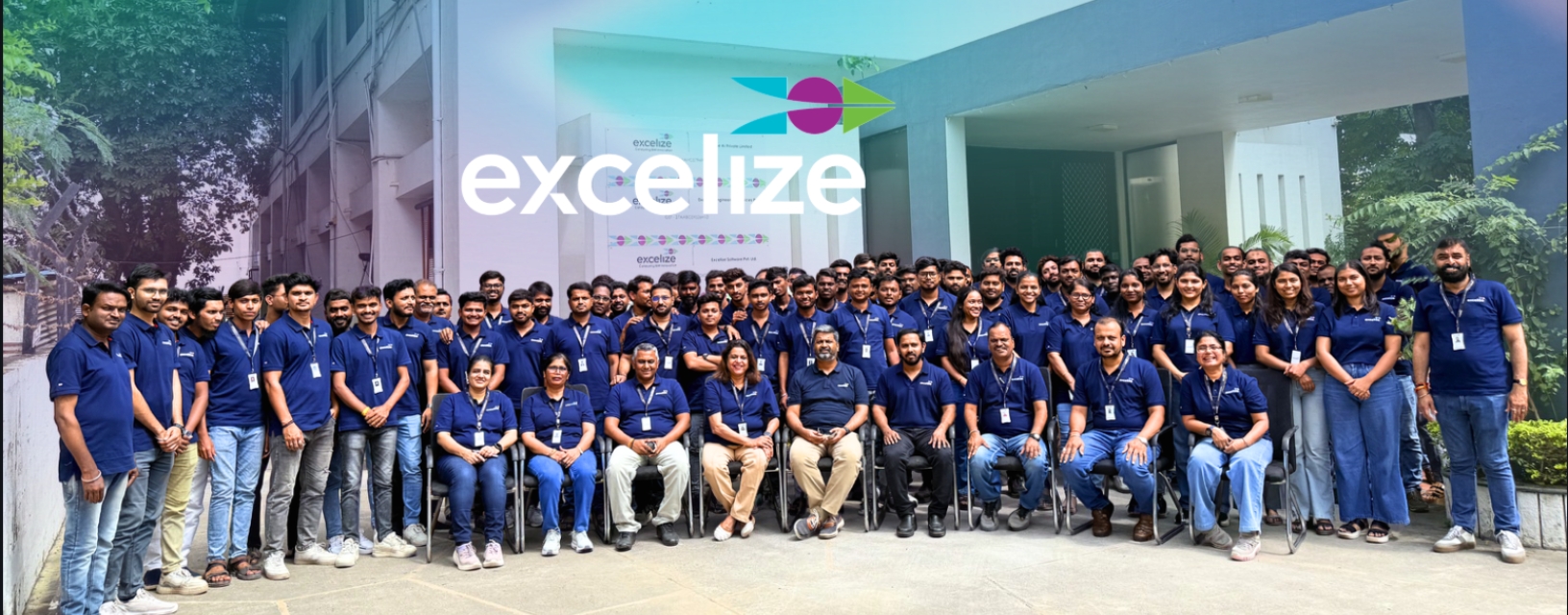
Get to know how, since 2004, Excelize grew into the BIM partner U.S. AEC firms trust — 300+ clients served and 2,500+ projects delivered end to end.
Learn MoreWho We Are
How We Work
Trust
Careers
Full-service BIM consulting for U.S. AEC firms, from your first capability read to a connected, working BIM practice.
Most firms don't have a BIM problem in any single area. They have a sequencing problem: adoption gets attempted before there's a real standard to adopt, or a standard gets written, and nobody's staged the path to actually get the team working in it. Excelize has been guiding U.S. architecture, MEPF, and general contracting firms through this migration since 2004, and BIM Consulting is built as one connected practice, not five separate line items that happen to sit on the same page.
BIM Consulting is the strategic and operational work of building, staging, and executing a firm’s BIM practice. It’s distinct from the modeling, drafting, and coordination work Excelize also delivers project by project.
It starts with an honest read on where a firm actually stands, whether that’s a quick directional score or a deeper consultative assessment. From there, it moves into the roadmap and standards that point toward. Next comes the staged adoption path, getting a team actually working at the next level, not just told to. Implementation and training, then execute that plan on real projects. Finally, data integration keeps a firm’s BIM, estimation, and procurement systems talking to each other instead of drifting apart.
Each piece works as a standalone engagement. Together, they’re built to hand off cleanly from one to the next.
A firm invests in a BIM Execution Plan and standards, but nobody stages the actual adoption path, so the plan sits in a folder while day-to-day work continues largely unchanged.
A firm rolls out new software and calls itself BIM-capable, without an honest capability read first, so the rollout targets a level of maturity the team was never actually at.
A firm's BIM model, estimation platform, and procurement system all hold different versions of the same project because nobody built the data integration layer connecting them, so hours are lost every week reconciling exports by hand.
Each of these is solvable on its own. The more expensive version of this problem is a firm that's paid for two or three of these pieces separately, from different partners, none of which were built to talk to each other.
The roadmap: standards, phased LOD targets, governance, and a repeatable BEP template every project draws from, evaluated against ISO 19650 and LOD standards. For architecture firms, this is what protects fixed-fee margins project after project instead of re-deciding LOD and coordination standards from scratch each time.
Explore BIM Strategy ConsultingAn honest read on where your firm stands today, from a free directional quiz to a deeper consultative review, benchmarked and documented well enough to use externally. General contractors preparing to bid on larger design-build work use this to put a real, defensible number behind a maturity claim instead of a sentence written from memory.
Explore BIM Capability AssessmentStaged support for moving from CAD, or from BIM used in name only, to genuine collaborative BIM, sequenced by where your team actually works today. Subcontractors and fabricators moving from shop-drawing CAD into coordinated 3D detailing tend to need this staged approach most, since the jump from 2D fabrication drawings to full model-based coordination rarely works as a single leap.
Explore BIM AdoptionA customized Implementation Plan tied to your project's BEP, with the software and protocol training your team needs to actually run it. MEPF firms coordinating complex mechanical, electrical, and fire-protection systems typically need this scoped tightly to clash-heavy coordination workflows, where the training has to match the exact process, not just the software.
Explore BIM ImplementationStructured, COBie-compliant asset data captured progressively through construction, so the handover package is genuinely usable by an operations team. This matters most on public and institutional work, where general contractors and design teams are often contractually required to deliver COBie-compliant data, not just a finished model.
Explore Asset Information Modelling / COBieFacility management requirements are aligned with the BEP from project inception, so the model and its data are FM-ready at handover. Architecture firms designing owner-operated buildings, hospitals, campuses, and institutional work in particular benefit from getting FM requirements into the design conversation early, rather than fielding them after the model is already locked.
Explore BIM & FM IntegrationA connected Common Data Environment linking your BIM, estimation, and procurement systems, so project data moves automatically. General contractors running multiple trades and disconnected point solutions tend to see the fastest return here, since a model update that doesn't reach the field or the estimate is exactly the kind of gap this closes.
Explore BIM Digital Integration
Take the free BIM readiness quiz: Starter, Warrior, Achiever, or Guru. It takes a few minutes, requires no commitment, and gives you a directional read on where your firm actually sits before you scope anything further.
For firms that want more than a directional score, the consultative Capability Assessment goes deeper, a structured review benchmarked against the maturity model within NBIMS-US, documented well enough to use in a proposal.
Whether it's the free quiz or a deeper consultative assessment, every engagement starts by establishing where your firm actually stands, not where the sales conversation assumes you are.
Where a documented strategy and standards don't already exist, we build them. Where they do, we confirm they still match your firm's current project mix before staging adoption around them.
We sequence the move from your current level of BIM use to the next, so each stage is genuinely working before the next one starts, rather than treating adoption as one leap.
Implementation runs the plan against your actual project types, with the training your team needs built in, scoped to a single project first or in parallel where your firm is ready for that.
Where a firm's BIM, estimation, and procurement systems still work in isolation, digital integration connects them, and where facility management or COBie handover requirements exist, those get built in from the start, not bolted on at closeout.
Some firms need a single piece of this, a capability read before an RFP deadline, a data integration fix between two specific systems, and that's a legitimate, standalone engagement. Other firms are better served building the practice: a documented roadmap, a staged adoption path, and the implementation and training to run it, so BIM stops depending on which project happens to have consulting budget attached to it.
Neither approach is wrong. The honest version of this conversation is figuring out which one your firm actually needs right now, not defaulting to the largest possible engagement because it's what gets proposed first.
Consultants work out of New Jersey and California, on U.S. hours, against U.S. codes and AHJ requirements, whichever piece of this you're starting with.
A documented standard nobody’s using, a rollout that stalled halfway, or a clean slate. Each change changes what the right next step is. Send us where things stand, and a sample comes back in 2 to 3 days.