
BIM Services
Concept to fabrication — coordinated Revit models, clash-free federated files and drawing sets your field crews can build from.
All services
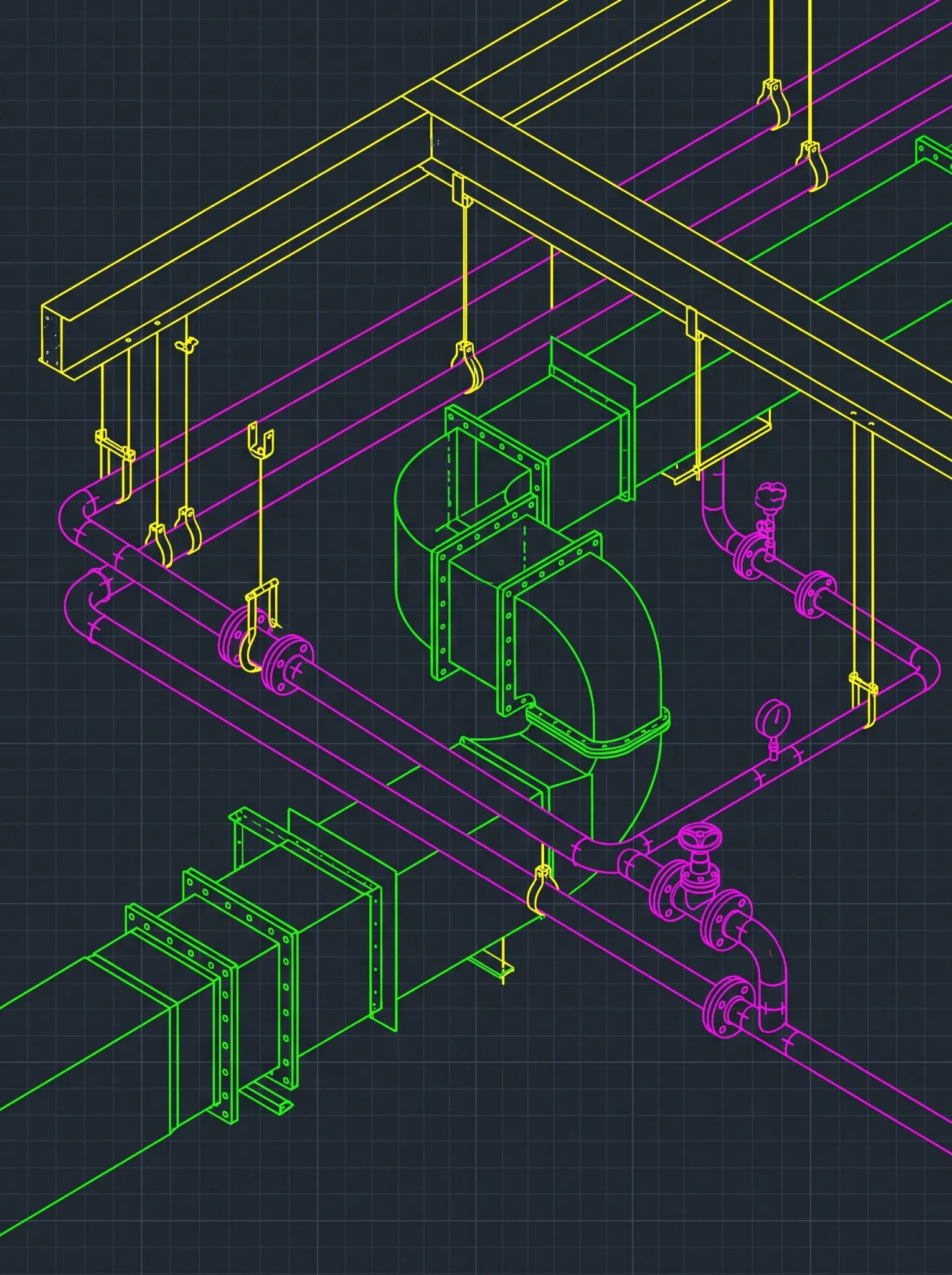
BIM Consulting
Standards, workflows and ISO 19650 processes that make BIM repeatable across every project your firm takes on.
All services
Staffing & Design Support
Trained modelers and engineers working in your time zone, to your standards — scale up in days, not hiring cycles.
BIM Staffing
Design Support
BIM insights, how-tos and industry deep dives for AEC teams.
Free downloadable guides for precon, VDC and BIM leaders.
Monthly BIM insights and project lessons in your inbox.
ROI Calculator and ISO 19650 readiness checklist.
Real projects with results in numbers, across five verticals.
Walkthroughs, model demos and project explainers.
What Is BIM Coordination? Clash Detection, LOD, and the Federated Model Explained
In-House BIM Team vs Outsourcing: What It Actually Costs a U.S. Firm
ISO 19650 Explained: What U.S. AEC Firms Need to Know Before Their Next Bid
Read more40-Story Office Tower, Dallas — 12 Trades Coordinated Clash-Free

420,000 sq ft of Class A commercial delivered at LOD 350 — full coordination, clash resolution and model-linked quantity takeoffs across every discipline.
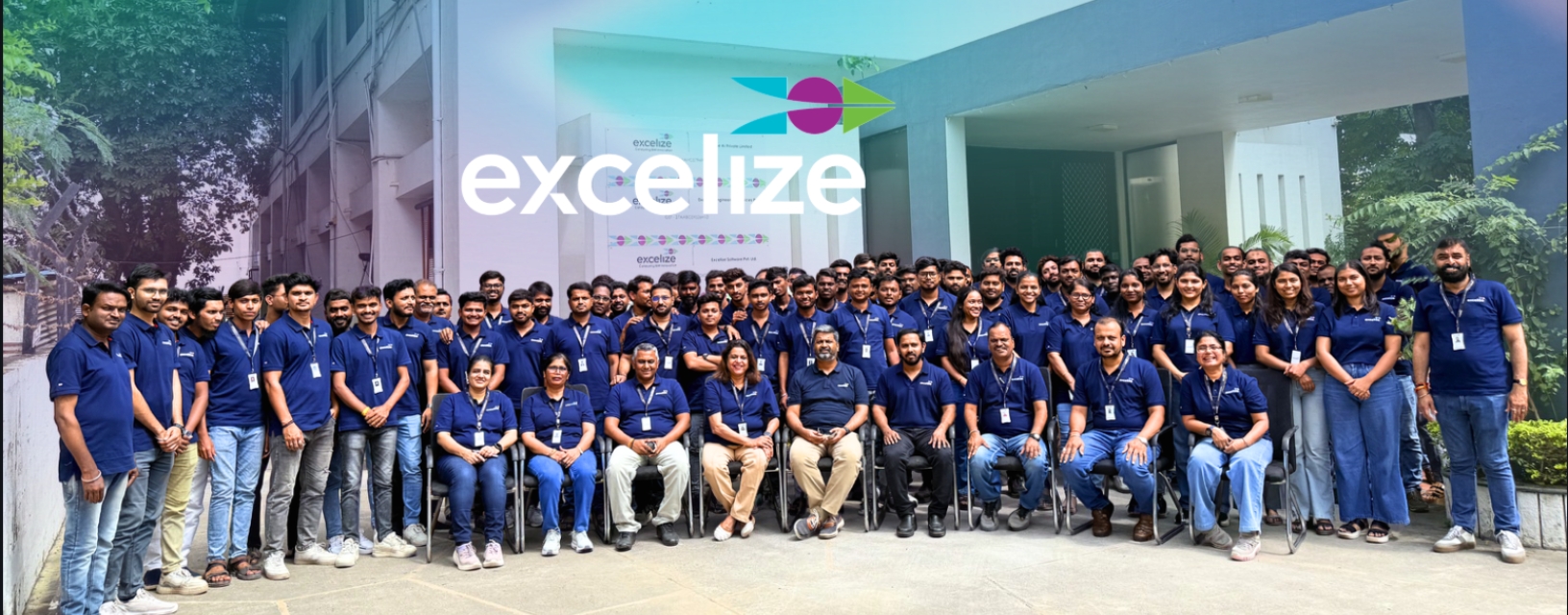
Get to know how, since 2004, Excelize grew into the BIM partner U.S. AEC firms trust — 300+ clients served and 2,500+ projects delivered end to end.
Learn MoreWho We Are
How We Work
Trust
Careers
Clash resolution at Design Development, clean construction documents, quantity takeoffs fast enough to support a competitive bid.
Commercial construction runs on speed and margin. A coordination process that's accurate but slow costs the bid before it costs the schedule. Excelize builds commercial BIM delivery around that constraint, coordinated fast enough to matter at Bidding, not just accurate enough to matter at Construction Administration.
Commercial GMPs are won and lost on the accuracy and speed of the estimate. A takeoff built from unlinked 2D drawings inherits every manual measurement error straight into the number, and on a competitive bid, that error either prices the job too high to win or too low to protect margin once construction starts. Neither outcome is visible until it's too late to fix.
The same timing problem shows up in coordination, not just estimating: catch an issue early, and it's a design adjustment; catch it late and it becomes a schedule problem the margin has to absorb.
Excelize scopes commercial engagements around both constraints at once: coordination has to be accurate, and it has to move at the pace a commercial bidding and construction schedule actually requires.
A clash resolved in the federated model at Design Development costs a modeling adjustment. The same clash found on site costs three things at once: an RFI to document it, a change order to resolve it, and a slipped trade sequence while the fix gets made, on a project type where the schedule is usually already tight and the margin usually already thin.
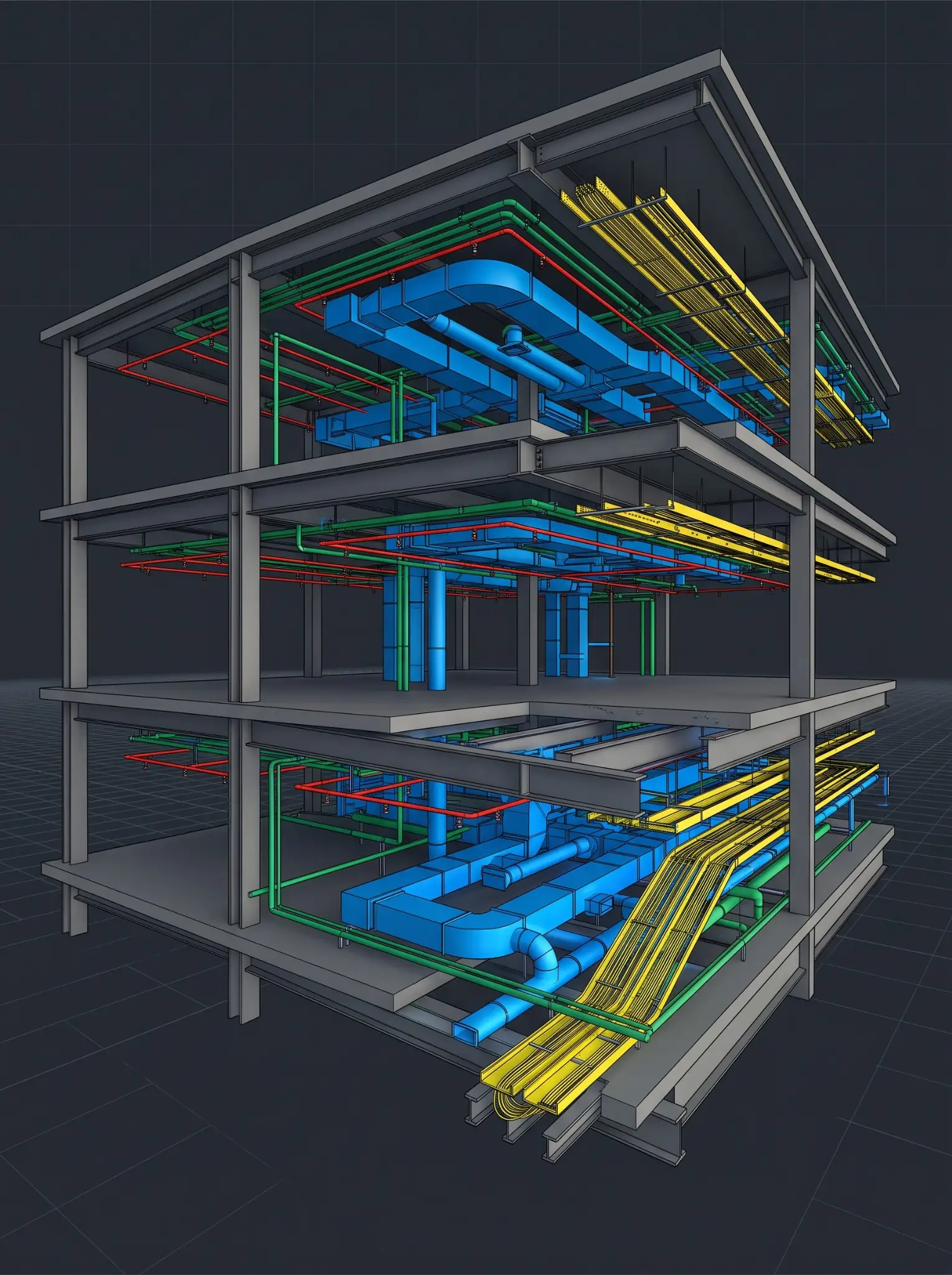
Physical intersections between MEPF, structure, and architectural elements, resolved at LOD 300 across the federated model.
Clearance and access violations that don’t show up as a physical intersection but block maintenance access or code-required clearances.
Clean enough to move directly into permitting without a second round of drawing cleanup.
Tied to the coordinated model rather than manual measurement, supporting a GMP submission inside a typical three- to six-week bidding window.
Runs once per project phase, tied to the BIM Execution Plan agreed at kickoff, so clash resolution happens on a predictable cadence rather than as an open-ended process.
Happens at each checkpoint, not just the modeler who built the geometry, so a clash resolution isn't considered final until someone with authority over that discipline has confirmed it.
Runs directly off the coordinated model, not a separate manual takeoff, so the estimate reflects what's actually been resolved, not what the drawings assumed before coordination.
A commercial project's coordination review can't slow down the bid or construction schedule to be thorough, so the review structure is built for both speed and completeness at the same time.
A clash resolved in the federated model at Design Development costs a modeling adjustment. The same clash found on site costs three things at once: an RFI to document it, a change order to resolve it, and a slipped trade sequence while the fix gets made, on a project type where the schedule is usually already tight and the margin usually already thin.
BIM and coordination workflows aligned with ISO 19650 information management principles, a working methodology, not a certification.
Ground-up and tenant fit-out projects, single-building and multi-phase programs, GMP bid support on three- to six-week timelines.
2,500+ BIM projects delivered since 2004.
U.S. presence: offices in New Jersey and California, project experience concentrated in TX, FL, NY, NJ, CA, PA. Documentation: insurance certificates, MSA terms, and process references available as part of your qualification process.
A clash found on site doesn't just cost a change order. It costs the schedule buffer a commercial project doesn't have. Protect the margin before the bid closes.