

BIM Services
Concept to fabrication — coordinated Revit models, clash-free federated files and drawing sets your field crews can build from.
All services
BIM Consulting
Standards, workflows and ISO 19650 processes that make BIM repeatable across every project your firm takes on.
All services
Staffing & Design Support
Trained modelers and engineers working in your time zone, to your standards — scale up in days, not hiring cycles.
BIM Staffing
Design Support
BIM insights, how-tos and industry deep dives for AEC teams.
Free downloadable guides for precon, VDC and BIM leaders.
Monthly BIM insights and project lessons in your inbox.
ROI Calculator and ISO 19650 readiness checklist.
Real projects with results in numbers, across five verticals.
Walkthroughs, model demos and project explainers.
What Is BIM Coordination? Clash Detection, LOD, and the Federated Model Explained
In-House BIM Team vs Outsourcing: What It Actually Costs a U.S. Firm
ISO 19650 Explained: What U.S. AEC Firms Need to Know Before Their Next Bid
Read more40-Story Office Tower, Dallas — 12 Trades Coordinated Clash-Free

420,000 sq ft of Class A commercial delivered at LOD 350 — full coordination, clash resolution and model-linked quantity takeoffs across every discipline.
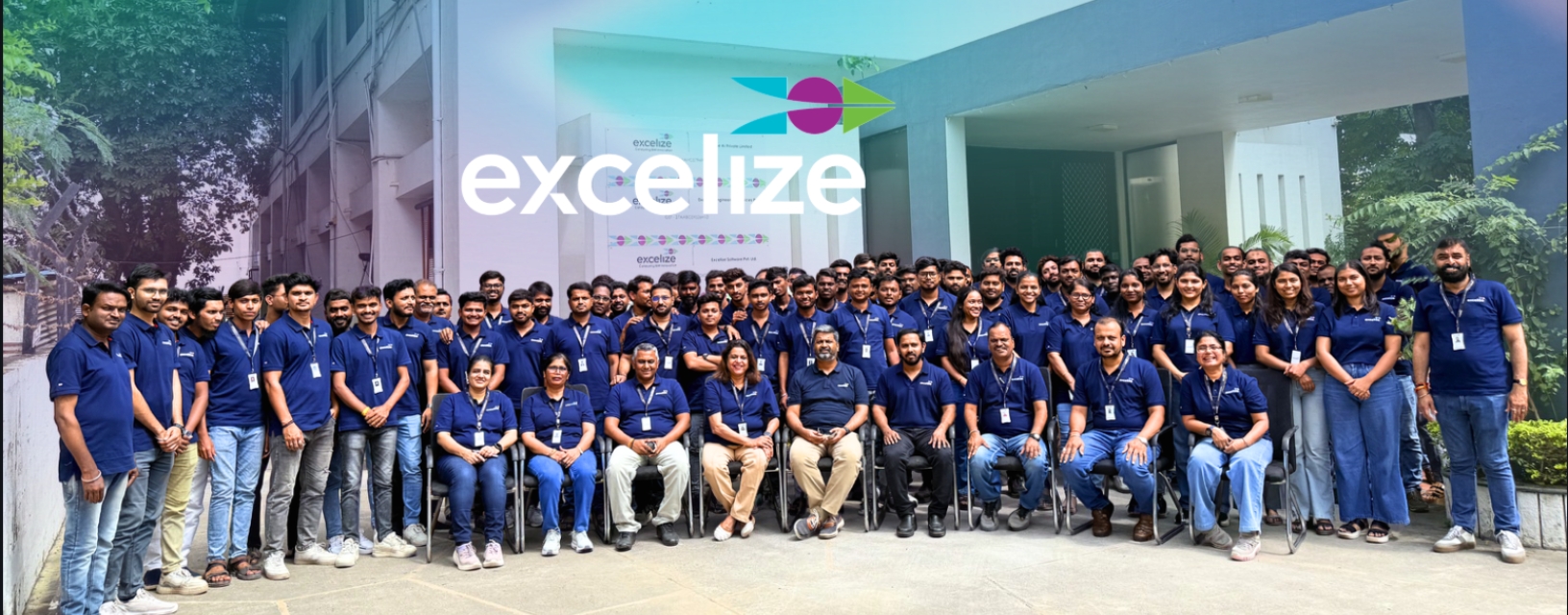
Get to know how, since 2004, Excelize grew into the BIM partner U.S. AEC firms trust — 300+ clients served and 2,500+ projects delivered end to end.
Learn MoreWho We Are
How We Work
Trust
Careers
A facility management strategy and BIM execution plan aligned from day one of the project, so the model handed over at closeout is actually FM-ready, not a design file the operations team has to rebuild from scratch.
Facility management usually becomes a concern after the model is already built, which is exactly the wrong order. Excelize embeds FM strategy into the BIM execution plan from project inception, developing the SOPs, guidelines, and COBie-compliant data structure that get the model ready for operations before construction is even finished, not after handover, when fixing it costs far more.
BIM & FM Integration Strategy is the work of aligning a project's BIM execution plan with its facility management requirements from the start, rather than treating FM as a closeout afterthought. It means developing SOPs for modeling and facility management jointly, writing FM guidelines directly into the BEP, and structuring the model's data to be COBie-compliant so it's genuinely usable by an operations team, not just technically exportable. This work happens in parallel with modeling and coordination, informed by workshops with the owner's operations stakeholders, so the requirements are captured while the model can still be shaped around them.
Facility management gets treated as a handover-day concern, brought into the conversation only once the model is essentially finished, by which point restructuring it to be FM-ready means significant rework.
A BEP gets written to cover design and construction requirements but says nothing about how the model needs to be structured for the operations team that inherits it, so nobody owns that gap until it's too late to close it cheaply.
Asset data ends up captured inconsistently across disciplines because there was never a joint SOP defining who enters what, when, for facility management purposes specifically.
That gap is expensive for owners in a predictable way: rebuilding FM-ready data after the fact always costs more than getting the requirements into the BEP from the start.
Structured workshops with your operations stakeholders early in the project, capturing facility management requirements while the model can still be shaped around them, not after design is locked.
Guidelines for BEP and facility management are developed together, so the execution plan actually reflects what the operations team will need at handover, not just design and construction requirements.
Documented SOPs covering both modeling standards and facility management data capture, built from workshop findings so both sides of the project are working from the same playbook.
Structuring the model's asset data to COBie compliance standards throughout the project, not retrofitted at closeout, so the handover file is genuinely usable, not just technically delivered.
A defined process for tracking facility management requirements from the initial workshop through to final handover, so nothing agreed upon early in the project quietly drops out by the end.
A review before final handover confirms the model and its data actually meet the FM requirements defined at project inception, catching gaps while there's still time to close them.
We run structured workshops with your operations stakeholders early in the project to capture what the facility management team will actually need from the model.
We write the facility management guidelines directly into the BIM execution plan, so design and construction requirements and FM requirements are documented together, not separately.
We develop the standard operating procedures for both modeling and facility management data capture, based on what the workshops surfaced.
Asset data gets structured to COBie compliance as the model develops, tracked against the SOPs, so it's built in progressively rather than reconstructed at the end.
Before final handover, we review the model and its data against the original FM requirements, confirming what was agreed upon at project inception actually made it into the delivered file.
An owner starting a new project has the most room to benefit, since FM requirements can shape the BEP from day one rather than being retrofitted later. An owner mid-project with an existing BEP that doesn't yet address facility management can still have FM guidelines added, though the scope shifts toward reconciling what's already been modeled against what operations will need. A design team or GC managing the project on the owner's behalf often becomes the one coordinating these workshops directly, since they're the ones holding the BEP that the FM guidelines need to be written into.
Consultants work out of New Jersey and California, on U.S. hours, and can join owner-side workshops directly where useful.
COBie-compliant asset data captured progressively through construction.
ExploreThe audit: an honest, benchmarked read on where your firm stands today.
ExploreConnecting your BIM, estimation, and procurement systems once adoption sticks.
Explore
Whether you're at project kickoff or already underway with FM requirements still undefined, that starting point shapes the scope. Send us where things stand, and a sample comes back in 2 to 3 days.